
Introduction
The global demand for premium hair extensions is growing rapidly, and India has become one of the world’s leading suppliers of high-quality human hair. Known for its natural texture, durability, and versatility, Indian hair is highly sought after by salons, beauty brands, wholesalers, and entrepreneurs worldwide.
If you’re planning to start a hair business or expand your existing product range, importing hair extensions from India can be a profitable opportunity. However, understanding the sourcing process, supplier selection, shipping requirements, and quality checks is essential to avoid costly mistakes.
In this guide, you’ll learn everything you need to know about importing hair extensions from India, from finding reliable manufacturers to receiving your first shipment successfully.
Why Import Hair Extensions from India?
India is one of the largest exporters of human hair extensions for several reasons:
Premium Quality Human Hair
Indian hair is naturally thick, strong, and versatile. It blends well with different hair types and can be styled, colored, and treated without losing quality.
Competitive Pricing
Compared to many other countries, Indian manufacturers offer excellent quality at competitive wholesale prices.
Wide Product Range
You can source:
- Hair Bundles
- Lace Closures
- Lace Frontals
- Tape-In Extensions
- Clip-In Extensions
- Keratin Extensions
- Halo Extensions
- Wigs and Toupees
Custom Manufacturing
Many Indian suppliers provide OEM and private-label services, allowing businesses to build their own hair extension brands.
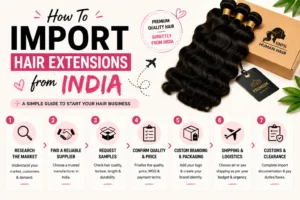
Step 1: Research the Hair Extension Market
Before placing an order, identify:
- Your target customers
- Preferred hair types
- Popular extension methods
- Market pricing
- Competitor offerings
Ask yourself:
- Are you selling to salons?
- Are you building an online brand?
- Do you need wholesale quantities?
- Will you offer private labeling?
A clear business plan helps you select the right products and suppliers.
Step 2: Find a Reliable Hair Extension Supplier
Choosing the right manufacturer is the most important step.
Look for suppliers who offer:
Consistent Product Quality
Request detailed product specifications and quality assurance information.
Real Product Images
Avoid suppliers that only use stock images.
Sample Orders
Always order samples before committing to bulk purchases.
Manufacturing Experience
Work with manufacturers that have experience serving international markets.
Customer Support
Reliable communication is essential during sourcing and shipping.
Step 3: Request Product Samples
Never place a large order without testing the product.
Evaluate:
- Hair softness
- Thickness
- Shedding levels
- Tangling resistance
- Color consistency
- Packaging quality
You can also perform:
- Wash tests
- Heat styling tests
- Dye tests
A sample order can save thousands of dollars in potential losses.
Step 4: Verify Hair Quality
High-quality hair extensions should have:
- Minimal shedding
- No strong chemical odor
- Healthy cuticles
- Consistent texture
- Long lifespan
- Natural shine
Avoid suppliers who cannot clearly explain the hair source or processing methods.
Step 5: Discuss Custom Branding
If you plan to launch your own hair brand, ask about private-label options.
Common customization services include:
- Custom packaging
- Logo printing
- Branded boxes
- Hair tags
- Product inserts
- Marketing materials
Private labeling helps your business stand out and build customer loyalty.
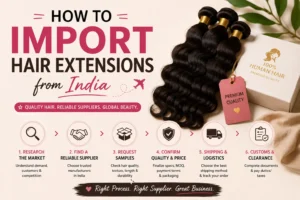
Step 6: Understand Import Regulations
Every country has different import rules.
Before placing your order, check:
- Import duties
- Taxes
- Customs requirements
- Product labeling regulations
- Business registration requirements
Consult your local customs authority or freight partner for accurate information.
Step 7: Choose the Right Shipping Method
Most hair extension suppliers offer multiple shipping options.
Express Shipping
Best for:
- Sample orders
- Small inventory purchases
- Fast delivery requirements
Air Freight
Best for:
- Medium-sized orders
- Faster delivery than sea freight
Sea Freight
Best for:
- Large wholesale shipments
- Cost-effective bulk importing
Choose the option that balances cost and delivery time.
Step 8: Place Your Bulk Order
Once satisfied with the samples:
- Confirm product specifications
- Verify quantities
- Review pricing
- Confirm delivery timelines
- Finalize packaging requirements
Request a formal invoice before making payment.
Step 9: Track Your Shipment
Most professional suppliers provide tracking details after dispatch.
Monitor:
- Shipment status
- Customs clearance
- Expected delivery date
Stay in communication with your supplier throughout the process.
Common Mistakes to Avoid
Many first-time importers make avoidable mistakes such as:
Choosing the Cheapest Supplier
Low prices often mean compromised quality.
Skipping Sample Orders
Always test before investing in bulk inventory.
Ignoring Communication Quality
Poor communication can lead to delays and misunderstandings.
Not Checking Import Rules
Unexpected customs fees can impact profitability.
Ordering Too Much Inventory Initially
Start small, test demand, and scale gradually.
Tips for Building a Successful Hair Extension Business
- Focus on premium quality products
- Build strong supplier relationships
- Invest in professional branding
- Offer excellent customer service
- Use social media marketing
- Collect customer reviews
- Stay updated with hair trends
Final Thoughts
Importing hair extensions from India can be an excellent business opportunity for salons, wholesalers, beauty retailers, and entrepreneurs. With access to premium human hair, competitive pricing, and custom manufacturing options, India remains one of the top destinations for sourcing hair extensions worldwide.